A complete list of publications can be found on my Google Scholar page.
Designing Student Interactions with In-Class Digital Systems
I explore how students can interact with each other, with course staff, and with technology as they learn computing. I have deployed systems in classrooms at 6 different universities.
iCODE: an intelligent tutoring system to teach code comprehension
Led by Vasile Rus, and in collaboration with Matt Bernacki (Univ. of North Carolina), Pani Kendeou (Univ. of Minnesota), & Andrew Tawfik. Funded by IES Development and Innovation award (2023-2026)
In-Class Coding Exercises in Introductory Computer Science Courses
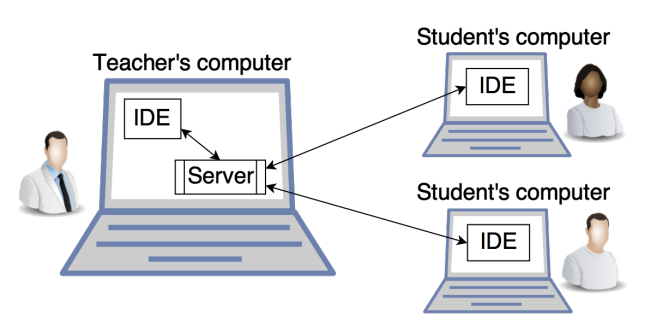
This project, in collaboration with Dr. Vinhthuy Phan, explores how to bring active learning into large intro CS classrooms with in-class coding exercises. We use the GEM system to send in-class assignments to students, handle student submission, and provide real-time feedback during class with a limited number of course staff. GEM serves as a digital platform for investigating how technology can support interactive learning activities during large intro courses.
Publications:
(SIGCSE 2022) Keep It Relevant! Using In-class Exercises to Predict Weekly Performance in CS1.

Digital In-Class Peer Feedback
This project explores ways to improve peer feedback on student presentations. Many college courses require students to give in-class presentations. This raises a number of challenges. Students who watch the presentation are typically not participating actively. Professors can be overwhelmed trying to provide feedback while also managing the class. The presenting students would benefit from receiving more feedback than the professor can provide. This project introduces PeerPresents, an in-class peer feedback system we developed to improve the feedback process for in-class presentations. PeerPresents also serves as a digital platform for investigating how technology can support interactive learning activities during in-class peer feedback exchange.
Publications:
(DIS 2020) Designing Interactive Scaffolds to Encourage Reflection on Peer Feedback
(CHI 2019) How Guiding Questions Facilitate Feedback Exchange in Project-Based Learning
(DIS 2016) PeerPresents: A Web-Based System for In-Class Peer Feedback During Student Presentations
Creating Pedagogical Training for Subject Matter Experts
Building on my prior experience as a teaching consultant and my expertise as a learning scientist, I design both the pedagogical training curriculum for subject matter experts and the digital tools used during training.
Training computer science teaching assistants
Through the STraTA-GEM project, we investigate how to train graduate TAs in computing to provide high quality written feedback on student code. We developed best practices for real-time feedback on in-class coding exercises and created a TA training course designed for international graduate TAs in computing. Funded by NSF IUSE Level 1 award (2021-2025).
Publications:
MEMScores
Training St. Jude scientists to effectively share their research with the public by partnering them with local high school science classrooms. Funded by NIH SEPA award (2023-2028)
Having Fun with Games Research
As a side interest, I often work with colleagues on games-related projects. See examples in the past projects below, such as investigating the impact of gaming during COVID, exploring audience interaction opportunities for live streaming, supporting feedback processes in the game design industry, and designing an in-class playtesting method for eliciting student feedback.
Past Research Projects
Learning Computer Science by Making Games
This project explores if and how students deepen their knowledge of computer science concepts when they make games to teach computing concepts to others. We analyze both the games students make and the game-maker’s learning through a mixed methods approach.

Assessing and Teaching Social Skills in Software Engineering Courses
In collaboration with Dr. Scott Fleming, this project explores soft skill development in software engineering courses. This project focuses on two areas: teaching strategies for helping students increase their social skills, and assessment strategies for helping instructors efficiently evaluate individuals who work on team projects.

Streaming Educational Games
What if students can learn just as much by watching someone else play an educational game as they would by playing the game themselves? This project investigates possibilities for streaming educational games on Twitch.tv, including how much students learn by watching, what the streamer should or shouldn’t do to encourage learning, and how chat interactions affect students watching the game.

Feedback in the Game Design Industry
Professional game design teams sometimes struggle to implement effective processes for getting helpful feedback on their games and prototypes. This project investigates common problems in giving, receiving, and making use of feedback in the game design process through interviews with designers, managers, artists, and other game design industry professionals.
Publication:
(CHI PLAY 2019) Peer Feedback Processes in the Game Industry

The EOTA Method – Improving Peer Feedback for Playtests in the Game Design Classroom
Student game designers use playtests to get frequent feedback on their games. However, student designers often don’t know what kind of feedback to ask for, and student feedback providers often need guidance to provide helpful feedback. The EOTA method scaffolds the feedback process by first encouraging those who played the game to share their experiences, then inviting those who watched the game to share what they observed, then asking all playtesters to offer theories that might explain what in the game caused those experiences or observations. Finally, playtesters may offer advice to the game design team.
Publication:
(Meaningful Play 2018) EOTA: A Method for Improving Peer Feedback in the Game Design Classroom.
How Role-Play Games Can Inform Interactive Learning Systems
Interactive learning techniques such as role-play are valuable to learners, but often difficult for instructors to implement. While technology can successfully support interactive learning, few systems have been designed or studied that support classroom role-play specifically. This research explores how role-play games (RPGs) can inform the design of systems to support role-play for interactive learning.
Publication:
(CHI Play 2017) How Role-Play Games Can Inform Interactive Learning Systems

Using Interactive Metaphorical Media to Change Beliefs
If you look to popular media, the aftermath of a natural disaster leaves behind helpless victims, selfish looters, and violent thugs. These beliefs, known as “disaster myths,” are not accurate. In fact, survivors typically care for one another, share resources, and build community in the aftermath of disaster. Why does the narrative of life after disaster matter? Because it affects policy. This work presents a case study of Pause, a game designed to change player beliefs about how people behave in the wake of a natural disaster, using metaphor as the key belief change strategy.
Interactive Learning Techniques for Introductory Computer Science Courses
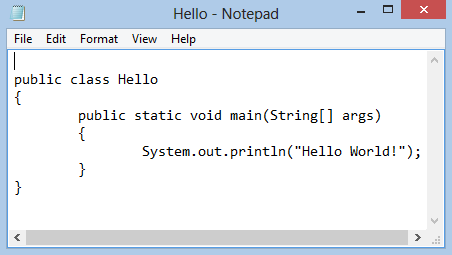
The traditional introductory computer science course generally consists of lectures filled with pre-coded examples. However, “live-coding”, the process of solving code examples that begins with a blank text file and requires students to produce code during lecture as a group discussion, gives students an interactive educational experience with little additional effort for the professor. This work presents an initial evaluation of live-coding in a college level introductory computer science course.
Publication:
(CCSC-SE 2015) Live-Coding in Introductory Computer Science Courses
Effective Practices in Game Tutorial Systems
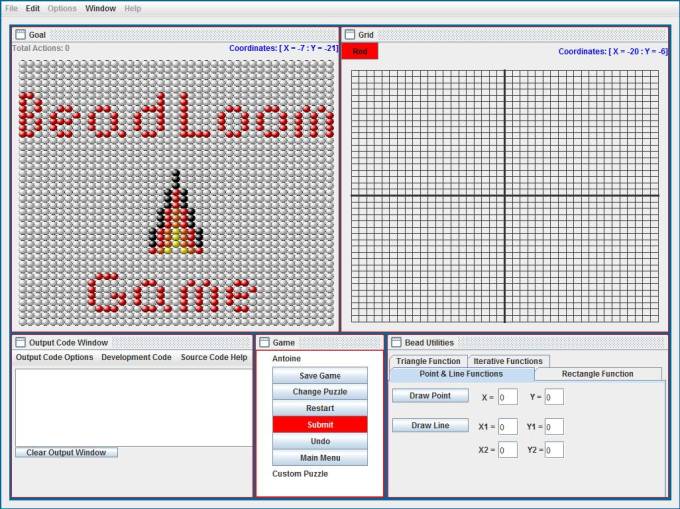
This work synthesized a system of effective practices for the design of educational game tutorials, and demonstrated their efficacy in a new tutorial system for an educational puzzle game called BeadLoom Game (BLG). When compared with a classroom introduction to the same material, students using the new tutorial system completed the tutorials in 75% less time while producing higher learning gains and higher levels of achievement. The practices devised and tested in our game tutorial system can be used to make educational games more scalable and effective.
Publication:
 Amy Shannon Cook